Health Supplements in Singapore: Evidence-Aware Guidance
Health supplements in Singapore span a broad range of consumer products. This site focuses on ingredient transparency, label literacy, and regulatory context — not on product recommendations or dosage guidance.
What counts as health supplements in Singapore
Supplement categories in Singapore cover a wide range of consumer products intended to add specific nutrients or ingredients to the diet. Common categories include:
- Vitamin and mineral supplements — such as vitamin C, vitamin D, B-complex vitamins, calcium, magnesium, and zinc
- Probiotic supplements — live microorganism products marketed toward digestive or immune health
- Collagen supplements — peptide or hydrolysed collagen products commonly marketed for skin, joints, or nails
- Herbal and botanical products — plant-derived extracts and traditional preparations
- Omega and fatty acid products — fish oil, krill oil, and plant-based omega-3 sources
These are not medicines. They are intended to supplement the diet and are not approved to treat, diagnose, or prevent any medical condition.
Why "evidence-aware" matters
"Evidence-aware" is not the same as "guaranteed." Evidence-based supplements in Singapore — or anywhere — are products where some supporting research exists, but the quality, size, and applicability of that research varies considerably. Being evidence-aware means:
- Asking what population the research involved and whether it applies to you
- Distinguishing between surrogate measures (e.g., a biomarker change) and outcomes that matter to daily life
- Being sceptical of dramatic claims, urgent framing, or absolute guarantees
- Using research as a starting point for questions — not as a substitute for clinical guidance
No supplement claim reviewed on this site constitutes a treatment recommendation or efficacy guarantee.
Label basics: reading supplement labels in Singapore
Understanding supplement labels in Singapore is one of the most practical skills a consumer can develop. Key elements to check on any label:
- Ingredient list and amounts per serving — what is actually in the product and in what quantity
- Units — mg, mcg, IU, CFU, and what they represent for that ingredient category
- Total servings per container — helpful for comparing cost and planning supply
- Allergen and caution statements — especially relevant if you have known sensitivities
- Overlap awareness — if you use multiple products, similar ingredients may stack unintentionally, increasing total intake beyond what a single product suggests
Ingredient transparency in Singapore supplement products can vary by brand and category. Prefer products with specific, quantified ingredient listings over vague proprietary blends with undisclosed amounts. For a structured approach, see the Label Reading Checklist.
Regulation context
Supplement regulation in Singapore is administered by the Health Sciences Authority (HSA) under the Health Products Act. Key points for consumers:
- Health supplements sold in Singapore must meet safety and labelling requirements
- Not all health supplements undergo individual pre-market efficacy review — regulatory compliance sets a safety baseline, not a performance guarantee
- Product claims on labels and marketing materials are subject to restrictions on therapeutic claims
- If a product makes strong claims about treating or curing conditions, it may be outside the regulatory definition of a supplement
For the most current regulatory information, refer directly to the HSA website. This site does not interpret regulatory decisions for specific products.
Where people buy: pharmacy vs online
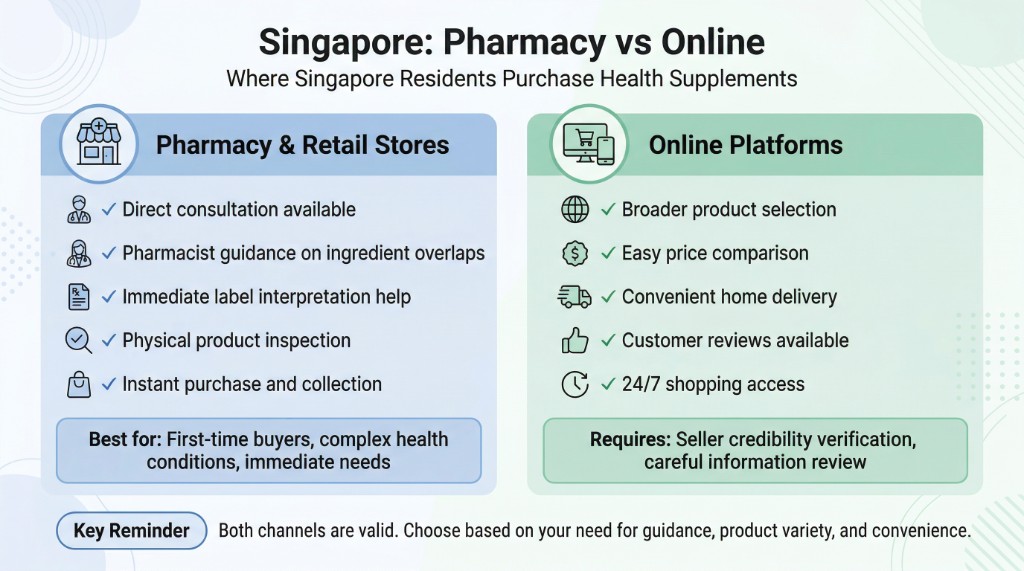
Singapore residents commonly purchase pharmacy supplements in person at Guardian, Watsons, Unity, and independent pharmacies, and increasingly through online platforms such as Lazada, Shopee, and brand-direct websites.
Pharmacy counters offer direct access to a pharmacist who can assist with label reading, ingredient overlap questions, and interactions with any prescribed medications. This is particularly useful for first-time buyers, people managing chronic conditions, or anyone taking multiple products simultaneously.
Online platforms provide broader selection, easier price comparison, and the convenience of delivery. The trade-off is that you must independently verify seller credibility, confirm that product information is complete and consistent, and make label judgements without in-person support.
Both channels are valid. The right choice depends on your familiarity with the product, your health context, and your comfort with label interpretation.
Start Here
Begin with the foundational guides below:
For a broader overview of the supplement landscape in Singapore, see the Supplements Singapore guide.
Official Brand Information
For Neoi brand and product information, visit the official site: